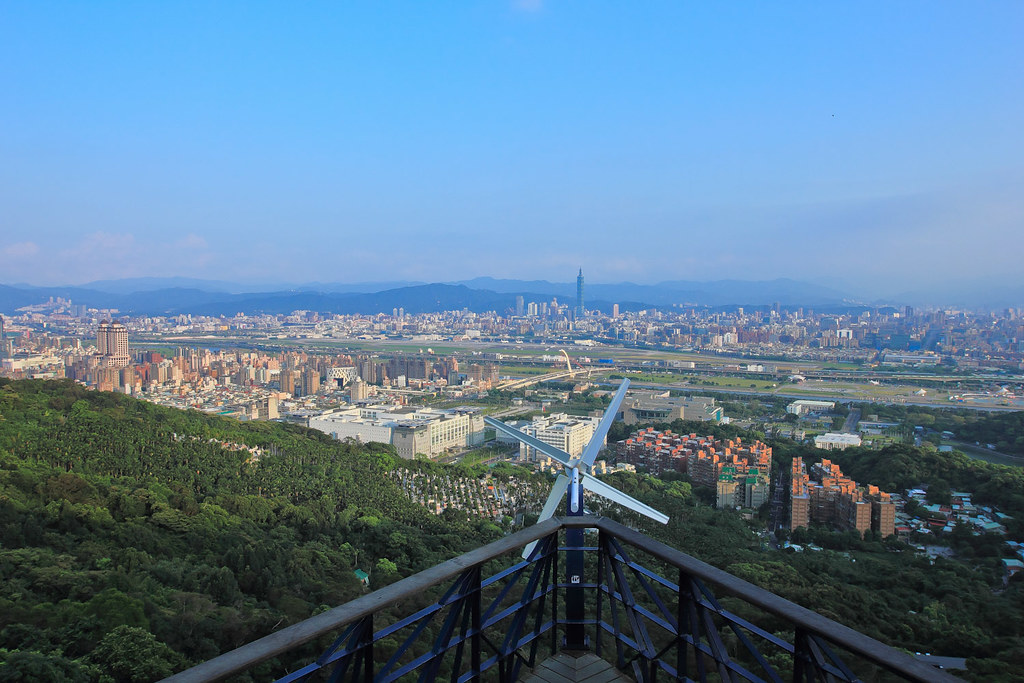
“We sell love, no sex”
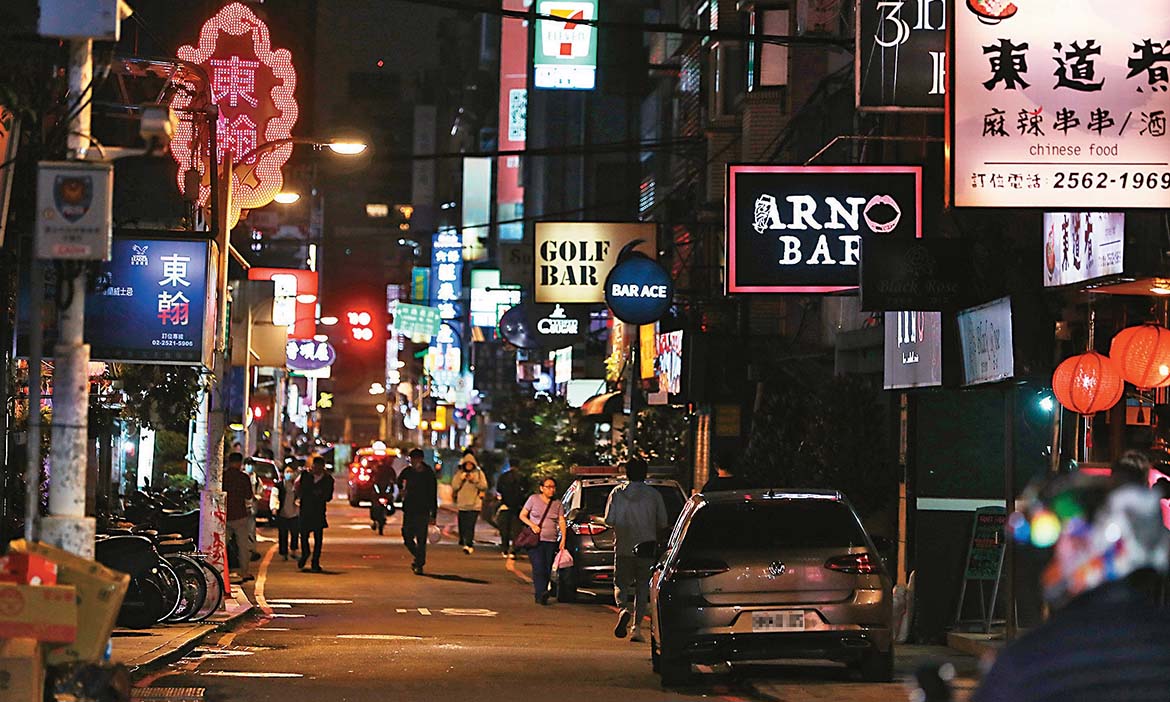
The alleys of Linsen North Road aren't a red-light district. They're something harder to explain — and more interesting.
If You Watched Light the Night
Netflix's Taiwanese drama Light the Night — known in Mandarin as 華燈初上 — is set in 1988 in a world of Japanese hostess bars on Linsen North Road. Two rival bar owners, a murder mystery, women in qipao dresses, candlelit counters, conversations half in Mandarin and half in Japanese.
If you watched it, you came away with a feeling for the place. But the drama raised more questions than it answered about what actually goes on in these alleys — and what's still there today.
The Alleys Themselves
Linsen North Road runs through the middle of Taipei's Zhongshan District. On either side of it, narrow east-west lanes run across it, numbered first alley (yi tiao tong) through ninth (jiu tiao tong). The word tiao tong blends a Chinese counting word with the Japanese word for "alley" — a linguistic fossil from the Japanese colonial era, when this neighborhood was called Daitomachi and designed after Kyoto's urban grid.
Walk into sixth or seventh alley after 10 p.m. and you'll find the buildings pressing close, warm-toned signs above every door, the muffled sound of conversation leaking from inside. Some of the voices are Japanese. Some are Taiwanese. A few might be yours.
What It Isn't
Let's get this out of the way: tiao tong is not a red-light district.
The Japanese-style hostess bars that built this neighborhood's reputation operate on a different model entirely. No sexual services. Physical contact — if it happens at all — is limited to holding hands. The most high-end establishments in their heyday required hostesses to wear their hair up, dress in tailored qipao, study flower arranging and golf, and hold fluent, professional-level Japanese.
What they sold was something closer to the feeling of being understood.
A Japanese businessman finishing a long day in a foreign city would sit at a counter. The hostess — or mama-san, the experienced woman who manages the room — would read, within minutes, what he needed that night. To be listened to. To be flattered. To simply not sit alone. She'd steer the conversation there without him noticing she was doing it.
In Taiwan, this skill has a name — chá yán guān sè (察言觀色), reading what someone needs from how they sit, what they order, what they don't say. In tiao tong, it became an art form.
This distinction matters because it's why the neighborhood survived for decades on word-of-mouth referrals among Japanese businessmen, and why it continues to exist today rather than having been shut down. It was never, structurally, a brothel.
How It Got Here
After World War II, American military personnel stationed in Taipei clustered around Linsen North Road. Bars opened to serve them. When the Americans left in the 1970s, Japanese trading companies had already begun sending employees to Taiwan in large numbers — and the entertainment infrastructure shifted to serve them instead.
The 1985 Plaza Accord caused a sharp appreciation of the yen and accelerated Japanese overseas investment. At its peak, tiao tong had over six hundred Japanese-style bars operating simultaneously. Japanese was effectively the neighborhood's working language.
By the 1990s, Japanese companies began pulling back from Taiwan. Anti-prostitution enforcement reduced foot traffic further. The neighborhood contracted — but didn't disappear.
What's There Now
The traditional Japanese hostess bars still operate, though fewer of them. Alongside them, the alleys have filled in with izakayas, sake bars, and regular cocktail bars that serve a broader clientele.
Meido (名度), in seventh alley at No. 25 of Linsen North Road's 119th Lane, is a retro karaoke bar run by a Japanese owner. There's a small stage, warm lighting, hanging plants that partially obscure the singer's face. Cover charge includes two drinks. It's the most accessible entry point in tiao tong — no intimidation factor, no complicated rules.
Zhixin Liao (知心寮), in ninth alley, is a sake bar run by an internationally certified sake sommelier. Over a hundred varieties of sake, a signature hot pot dish called the Triple Forces Pot, and bar seating where you can stay all evening. English-speaking staff. Technically sophisticated, accessible to visitors who don't speak Japanese, but still carrying the neighborhood's old character of unhurried, attentive hospitality.
Tonbei (吞兵衛), at No. 28 of Linsen North Road's 119th Lane, is a two-decade-old izakaya that imports some ingredients directly from Japan. Traditional in every sense.
BAR NINE, in sixth alley, was opened by a woman named Sienna who spent more than a decade working as a hostess and mama-san before opening her own place. It's a bar, not a hostess club — lower price point, no formal structure — but the quality of attention you'll receive at the counter is not something she learned to turn off.
After Last Call
Tiao tong closes late. Three or four in the morning is normal.
The after-hours ritual is a bowl of noodles. At the corner of Lane 67 off Linsen North Road, there's an unmarked stall called Liying Noodles — sesame noodles, open into the middle of the night, no sign, no English menu. A few blocks down, at No. 279, Gaojia Village Rice Noodle Soup has been operating for nearly fifty years and is still serving until the small hours.
The people sitting next to you at those noodle stalls might have just finished their shift at one of the nearby bars.
A Few Practical Notes
Go late. Nothing opens before 9 p.m., and the neighborhood doesn't feel like itself until closer to 11.
Japanese helps. Not required, but tiao tong was built by and for Japanese speakers, and a significant portion of staff and regular clientele still communicate in Japanese. Meido and Zhixin Liao can handle English.
Traditional hostess bars are not off-limits to visitors, but they're expensive and the format can be confusing if you don't know how it works. You pay per bottle opened, not per drink. You tip for the conversation, not for drinks. The mama-san manages the room and it's worth treating her accordingly.
The neighborhood is safe. Its complicated reputation is a legacy of its history, not its present reality.
Tiao tong is worth an evening precisely because it doesn't fit the categories most travelers bring to nightlife. It isn't a bar district. It isn't a red-light district. It's a neighborhood that spent forty years figuring out how to make people feel less alone — and got quite good at it.